

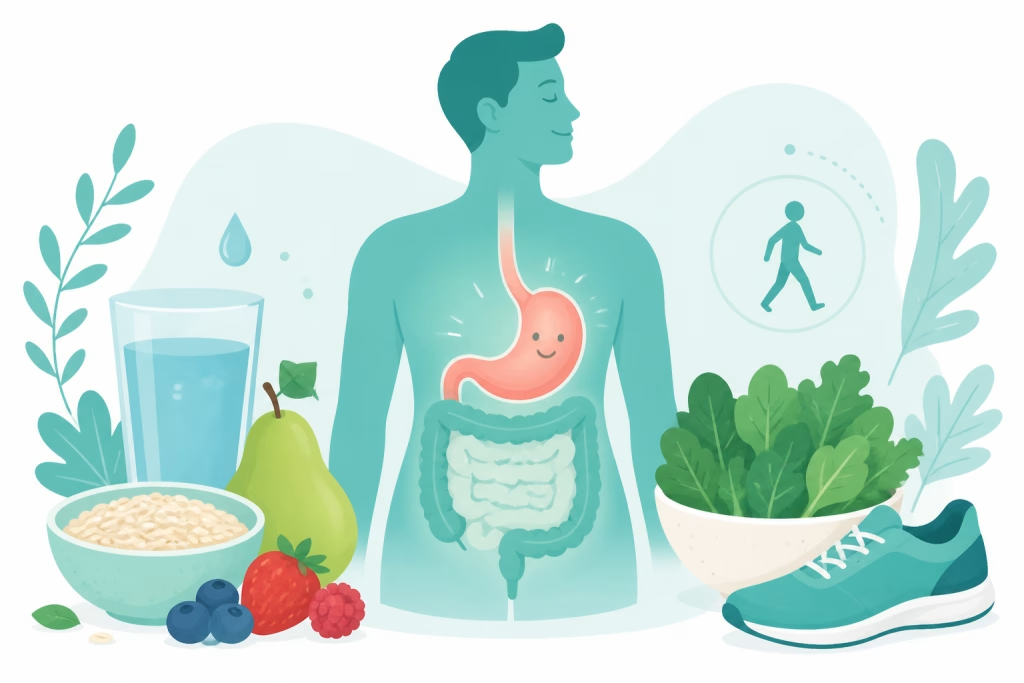
GLP-1 constipation is one of the most common — and least talked about — side effects of medications like Ozempic, Wegovy, Mounjaro, Zepbound, and the newer GLP-1 pills. If your digestion has slowed to a crawl since starting treatment, you’re not doing anything wrong, and you’re definitely not alone. In clinical trials, roughly a quarter of people taking semaglutide for weight loss reported constipation, and around 17% of people on tirzepatide experienced it too.
The good news: for most people it’s temporary, and a handful of simple habits can make a big difference. Here’s why it happens, how long it usually lasts, and what actually helps.
Why GLP-1 Constipation Happens
GLP-1 medications work partly by slowing gastric emptying — food moves through your stomach and intestines more slowly, which helps you feel full longer and eat less. That’s the point of the medication, but it comes with a digestive trade-off. Slower transit means your colon has more time to absorb water from stool, leaving it harder and more difficult to pass.
A few other factors pile on:
- You’re eating less overall. Smaller meals mean less bulk moving through your system, which weakens the natural signals that trigger a bowel movement.
- You’re likely getting less fiber. When appetite drops, fiber-rich foods like vegetables, fruits, and whole grains are often the first things crowded off the plate.
- You may be drinking less. Reduced appetite often reduces thirst cues too, and mild dehydration makes stool harder.
Constipation tends to be most noticeable in the first several weeks of treatment and again after dose increases, whether you take weekly shots or a daily pill.
How Long Does GLP-1 Constipation Last?
For most people, GLP-1 constipation improves as the body adjusts. One study cited by GoodRx found that constipation on semaglutide lasted about six weeks on average. Some people feel better sooner, while others notice it flaring up again with each dose escalation.
Because it often tracks with dose changes, it helps to log when symptoms start and stop alongside your doses. Patterns become obvious quickly — for example, you might see constipation reliably appear in the week after each increase, then fade. That’s useful information for you and your care team when deciding how fast to titrate.
7 Ways to Relieve GLP-1 Constipation
1. Drink more water than feels natural
Aim for roughly 2 to 3 liters of fluid per day. Since GLP-1s blunt thirst cues for many people, don’t wait until you feel thirsty — keep a bottle nearby and sip steadily through the day.
2. Rebuild your fiber intake gradually
Target 25 to 30 grams of fiber daily from foods like berries, pears, oats, beans, lentils, and leafy greens. Increase slowly — jumping from 10 to 30 grams overnight can cause gas and bloating. Our guide to fiber for GLP-1 users breaks down exactly how to get enough without upsetting your stomach.
3. Move your body daily
Even 10 to 20 minutes of walking stimulates the muscles that move food through your gut. Movement after meals is especially effective.
4. Consider magnesium
Magnesium citrate or magnesium oxide draws water into the bowel and is a common first-line option. Check with your provider or pharmacist about a dose that’s right for you, especially if you have kidney issues.
5. Use an osmotic laxative short-term if needed
Polyethylene glycol (MiraLAX) is generally considered safe for short-term use. If you find yourself needing it daily for more than about two weeks, loop in your provider rather than continuing indefinitely.
6. Don’t skip meals entirely
Eating triggers the gastrocolic reflex — the signal that tells your colon to move. Several small meals keep that reflex firing better than one large meal or grazing on almost nothing.
7. Track symptoms alongside your doses
Constipation is much easier to manage when you can see the pattern. Logging doses, symptoms, and what relief steps you tried takes seconds, and you can track it all free with Pep — so your next provider conversation is built on data instead of guesswork.
When to Call Your Provider
Most GLP-1 constipation is uncomfortable but manageable at home. Contact your provider promptly if you experience:
- No bowel movement for more than three days despite trying the steps above
- Severe abdominal pain, bloating, or vomiting
- Blood in your stool
- Constipation alternating with diarrhea that doesn’t settle — our guide to GLP-1 diarrhea covers the flip side of this coin
These can signal something beyond routine medication adjustment, and they’re worth ruling out. Constipation is also just one piece of the digestive picture on these medications — our overview of managing GLP-1 side effects covers the full landscape, if nausea is part of your experience, see our guide to reducing nausea on GLP-1s, and if acid creeps up after meals, our GLP-1 heartburn guide explains what helps.
GLP-1 Constipation FAQ
Does GLP-1 constipation go away on its own?
Usually, yes. For most people it improves within several weeks as the body adapts, though it may return briefly after dose increases. Consistent hydration, fiber, and movement speed up the adjustment.
Which GLP-1 medication causes the least constipation?
Rates vary by medication and dose — around 24% for weight-loss doses of semaglutide versus roughly 17% for tirzepatide in trials — but individual responses differ widely. Whichever you take, the prevention steps are the same.
Can I take a laxative while on Ozempic or Zepbound?
Occasional use of an osmotic laxative like MiraLAX or a magnesium supplement is generally considered fine, but daily use beyond a couple of weeks deserves a conversation with your provider. Start with water, fiber, and movement first.
Download Pep free — track your shots, pills & progress in one app.


This article is for educational purposes only and is not medical advice. Always consult your healthcare provider about your medications and symptoms.